GNU and Linux: The Freedom to Understand, Change and Share
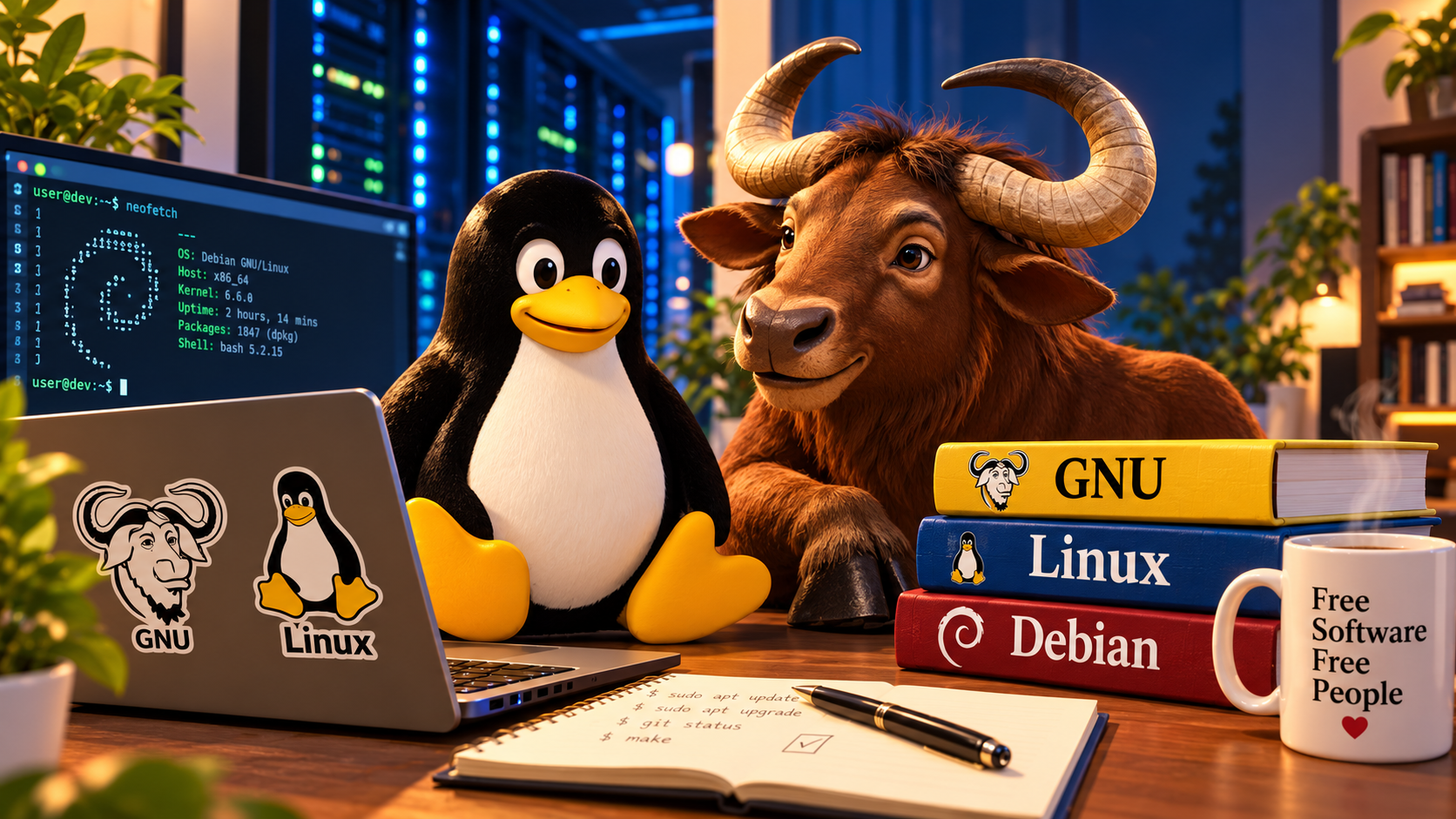
Tux, the Linux penguin, and the GNU mascot stand for two closely connected parts of the free-software world: the Linux kernel and the GNU project.
Why GNU and Linux belong together
The GNU project was announced by Richard Stallman in 1983 to build a free operating system. The Linux kernel, first released by Linus Torvalds in 1991, is used with GNU software in many distributions, including Debian GNU/Linux. Their communities and licenses are not identical, but both have helped build a world of reusable software.
The four essential freedoms
The Free Software Foundation describes four freedoms: to run a program for any purpose (freedom 0); to study and modify it (freedom 1); to redistribute copies (freedom 2); and to share modified versions (freedom 3). Access to source code is necessary for freedoms 1 and 3.
Freedom is more than price
Free software is about user rights, not necessarily zero cost. The ability to inspect code, fix problems, adapt systems and share improvements makes communities less dependent on a single supplier. For administrators, this can mean greater auditability, interoperability and long-term control.
What the mascots represent
Tux represents the Linux kernel and its community. The GNU head represents the GNU project and its emphasis on software freedom. Together they make an inviting introduction to the ideas behind free operating systems.
Explore further
GNU: What is free software? · Free Software Foundation · TUX GNU mirror in Israel